
Venice: Wheelchair-Accessible Things to Do in St. Mark’s Square
Venice is famous for its canals, gondolas, historic buildings and beautiful squares. But how WHEELCHAIR Accessible is it for wheelchair users?
During my visit, I explored St. Mark’s Square, visited St. Mark’s Basilica and Doge’s Palace, and wandered through the smaller streets of Venice. Here’s what I experienced, along with some practical accessibility tips.
1. Getting to St. Mark’s Square by Vaporetto
We started our journey from the Hilton Garden Inn Venice Mestre, where we were staying.
We took a bus from our hotel to Piazzale Roma, the main bus terminal in Venice.
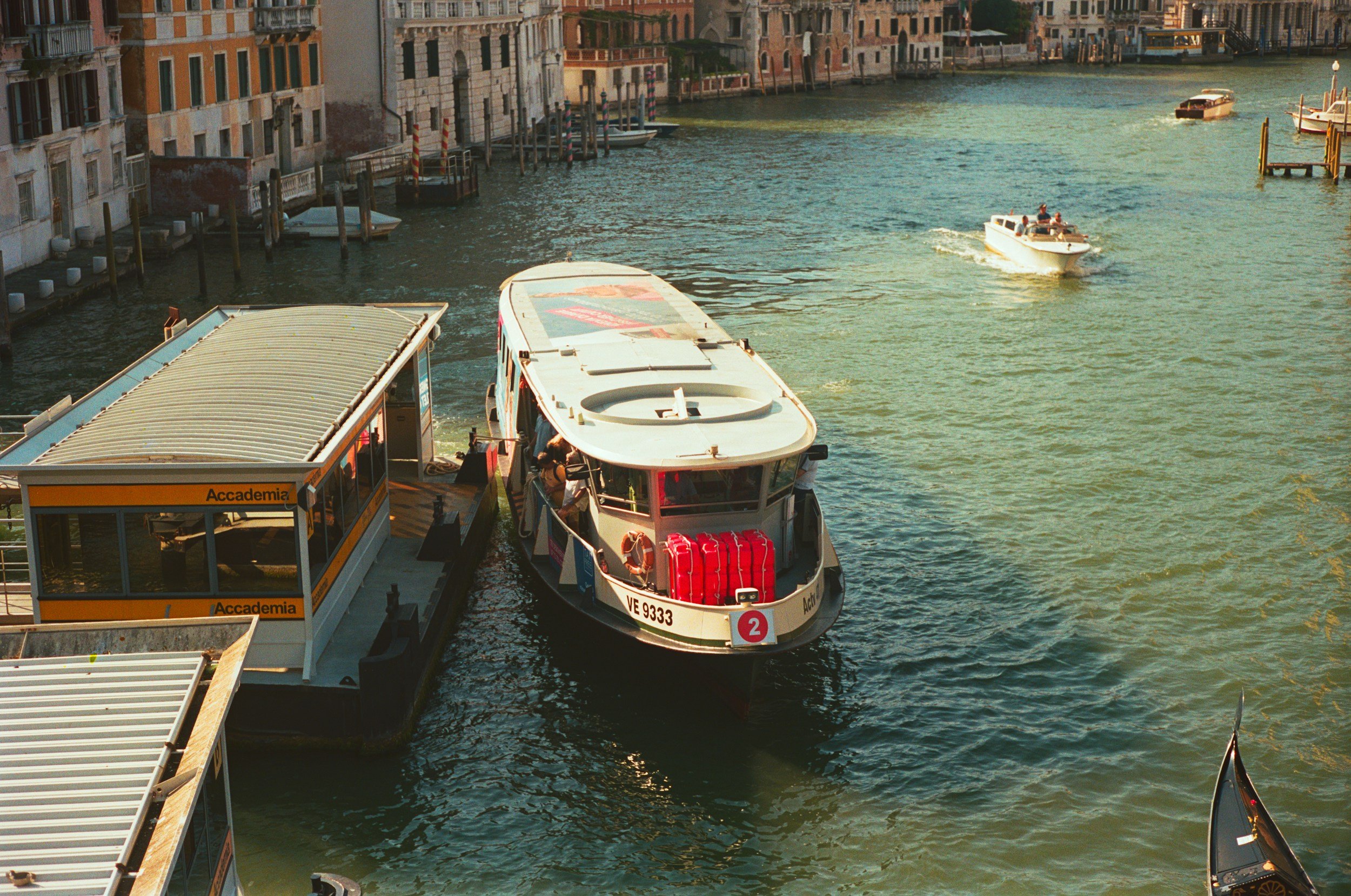
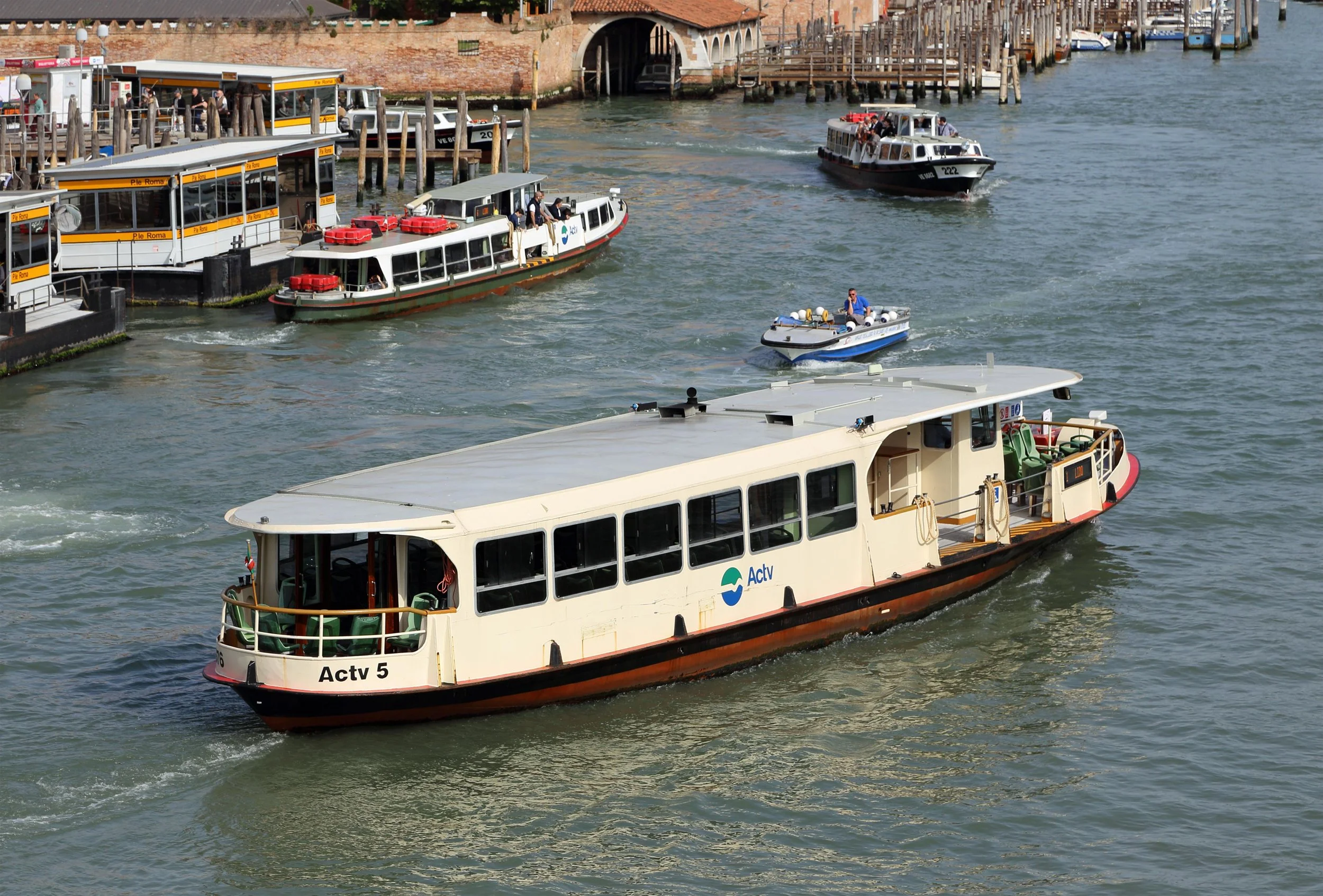
From there, we took a wheelchair-accessible Vaporetto (water bus) to St. Mark’s Square.
Vaporettos are a convenient way to travel around Venice, and I found the staff very friendly and helpful.
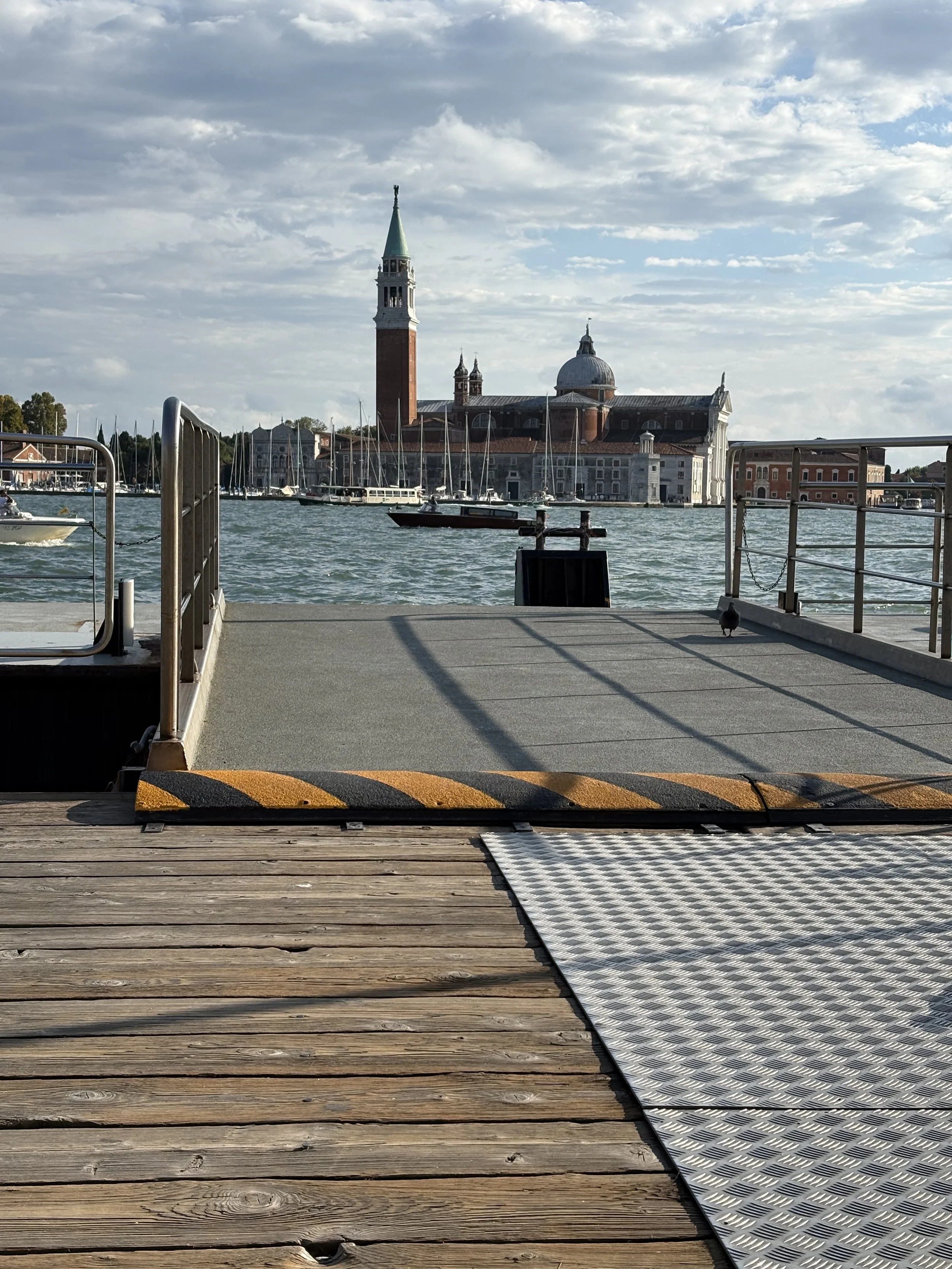
If there was a gap between the landing platform and the boat, staff placed a ramp to help me board.
If the ramp was too steep, they helped me get on and off safely.
There was a designated space for my wheelchair on the boat.
I recommend speaking to the staff at the Vaporetto stop before boarding. Let them know you’re waiting with a wheelchair so they can guide you to the correct boat and help you board.
My tip: Use Google Maps navigation with the wheelchair-accessible option enabled to find suitable routes. Check which bus to take from your hotel, the correct bus stop, the Vaporetto number and the boarding stop. Confirm everything with the local staff, as routes and boarding arrangements can vary.
ACTV Official page - https://actv.avmspa.it/en/node/2857
2. Exploring Venice’s Bridges in a Wheelchair
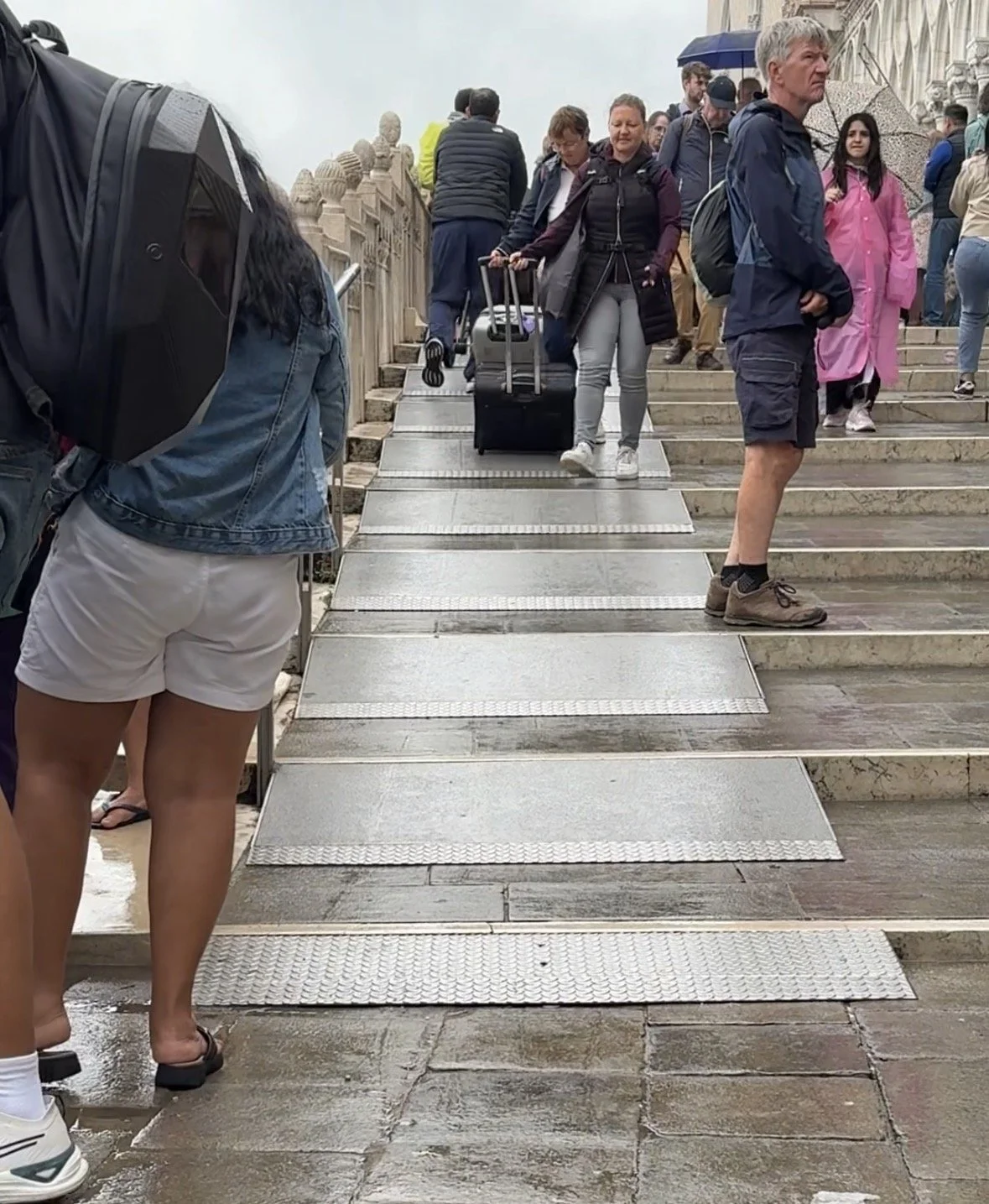
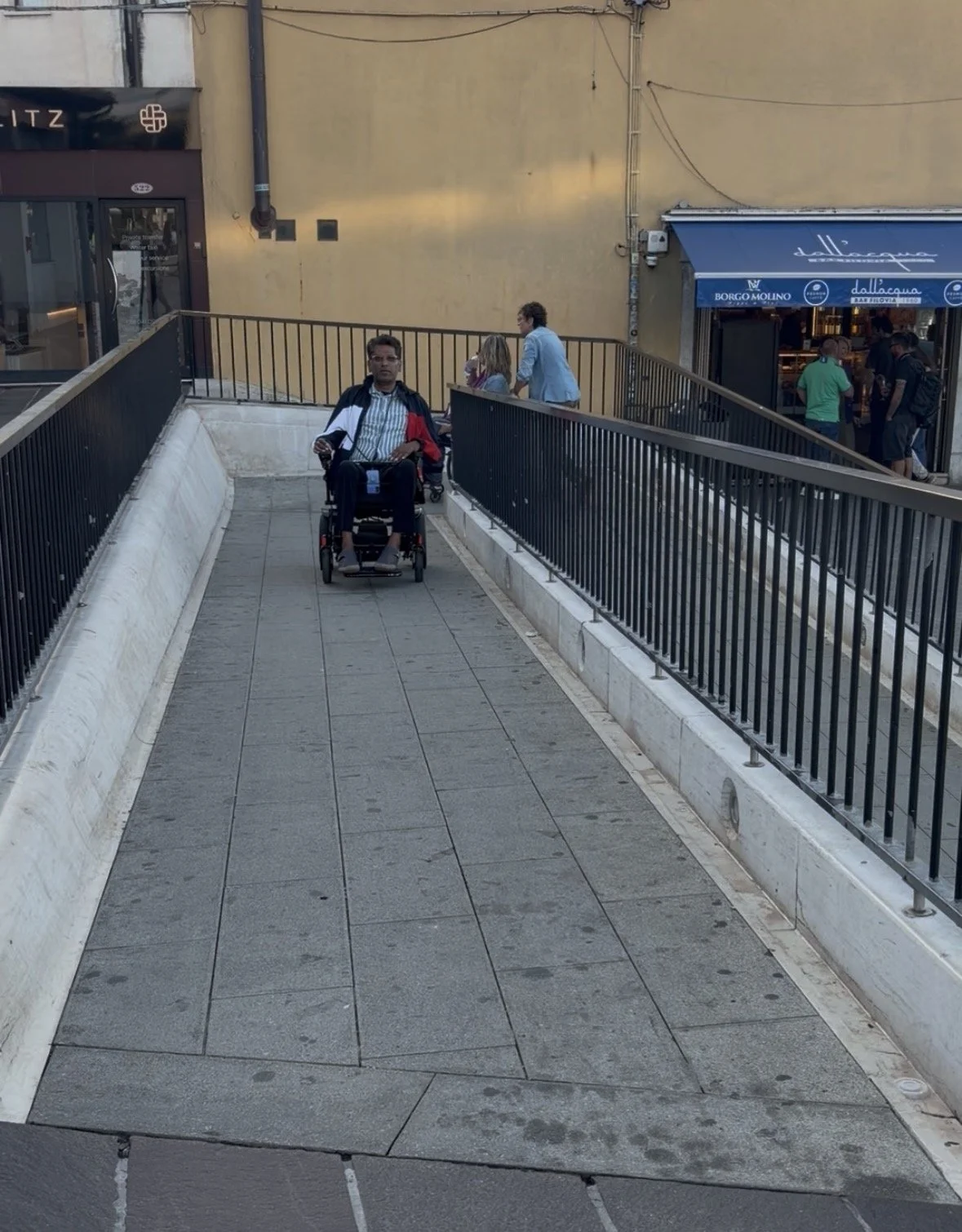
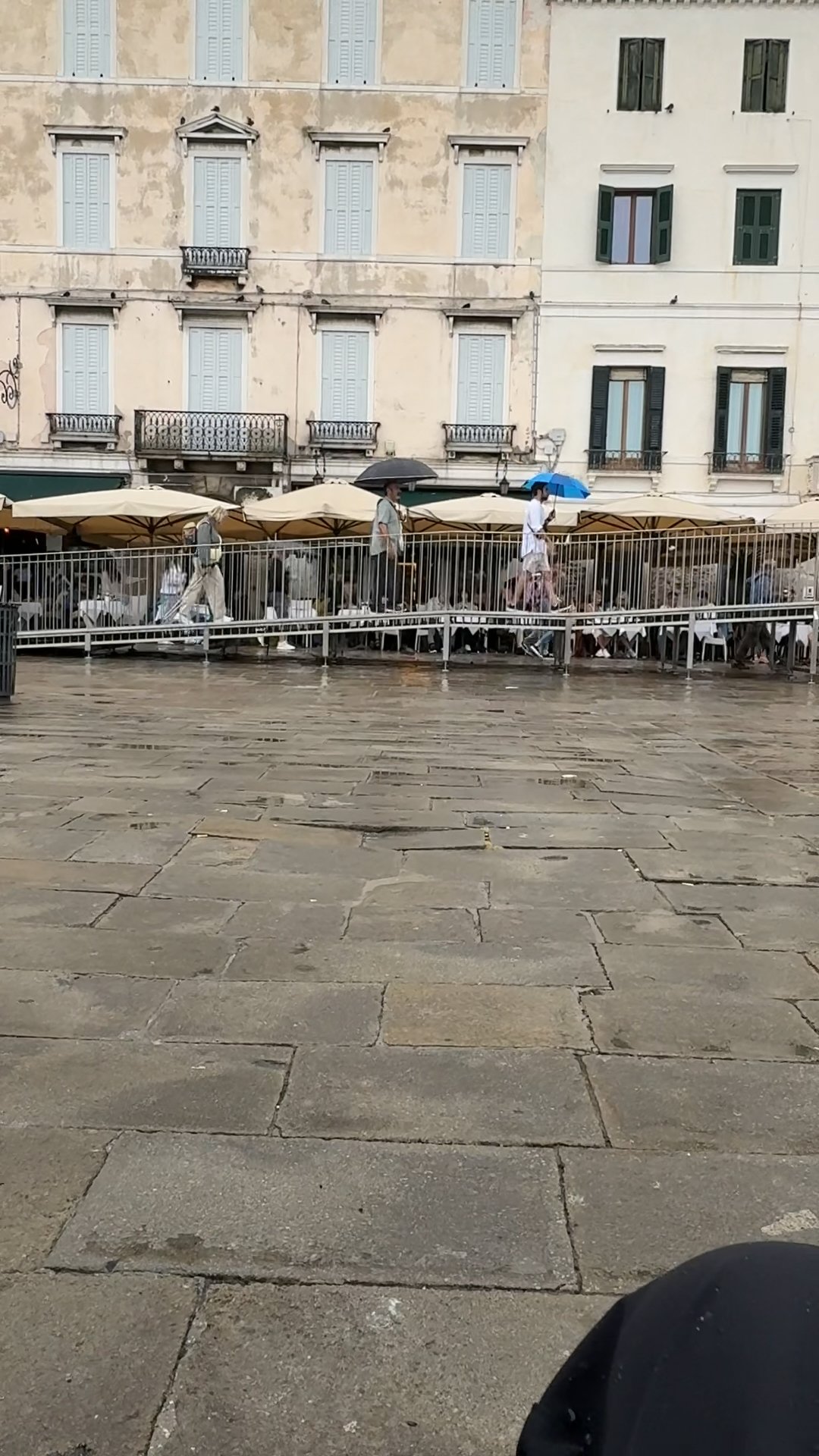
One of my biggest concerns about Venice was its many bridges, some of which have stairs.
Fortunately, on the routes I used, I came across bridges where ramps had been placed over the steps.
These ramps made it possible for me to cross bridges that would otherwise have been difficult to navigate.
With the accessible Vaporetto and these ramps, I was able to reach St. Mark’s Square in my power wheelchair.
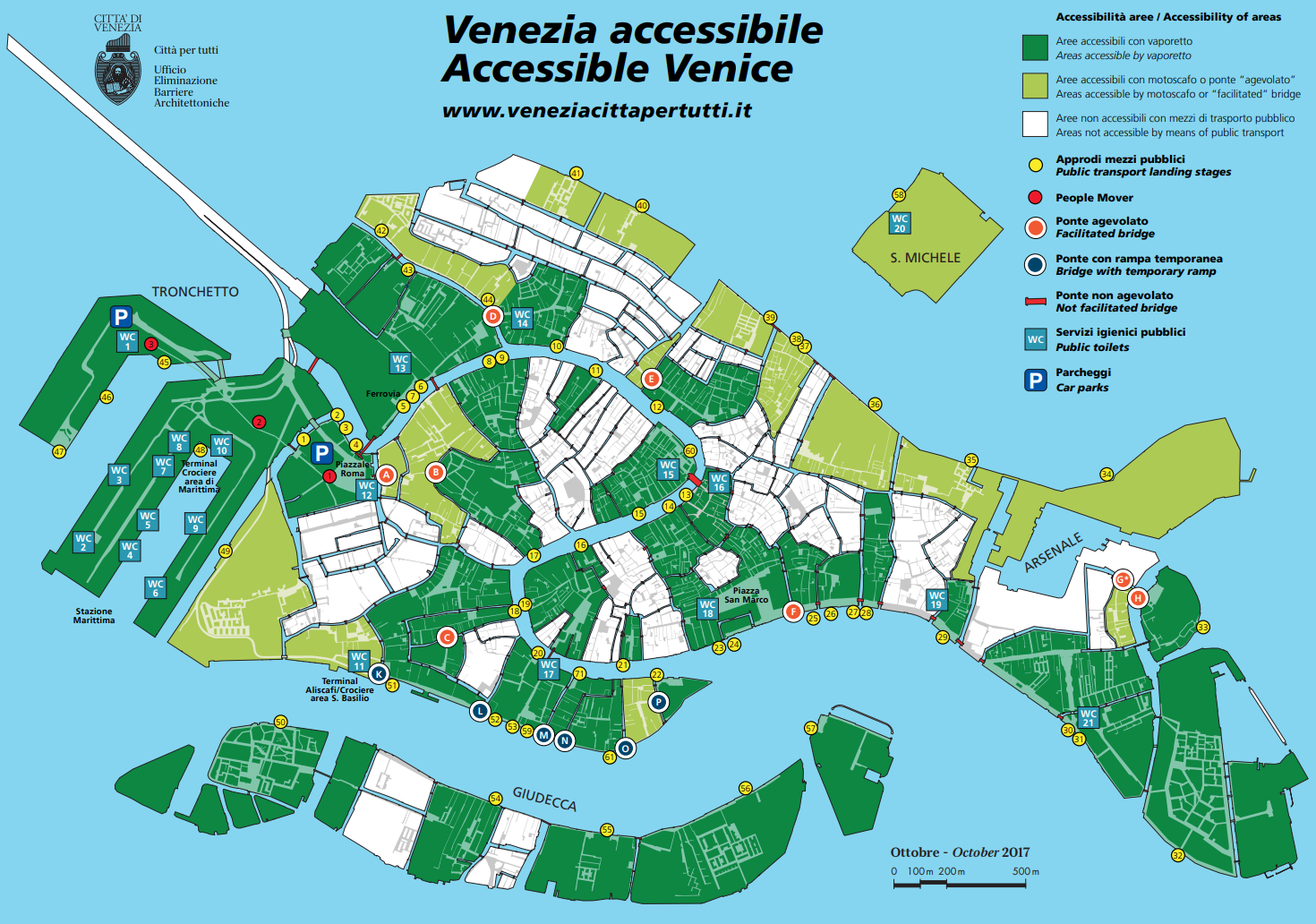
However, accessibility can vary from one bridge and route to another. I recommend checking your route in advance rather than assuming every bridge will have a ramp.
You can find the official Wheelchair Accessible Venice map here https://www.comune.venezia.it/sites/comune.venezia.it/files/page/files/mappa%20Italiano%20Inglese%202017_1.pdf
https://www.comune.venezia.it/en/content/accessible-venice-map
Also some useful accessibility info can be found here - https://www.veneziaunica.it/en/plan-your-trip/accessible-venice
3. Visiting St. Mark’s Basilica
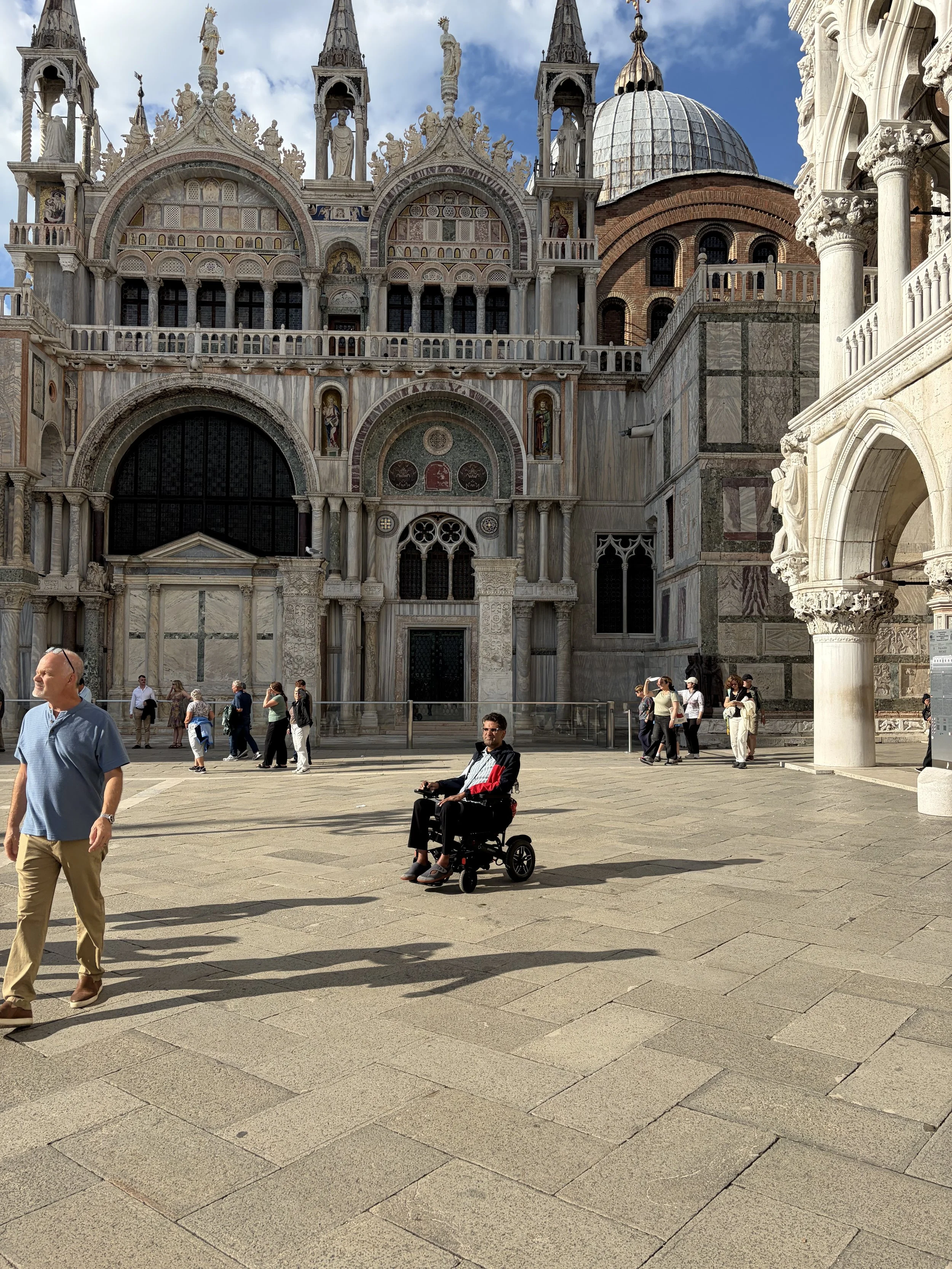
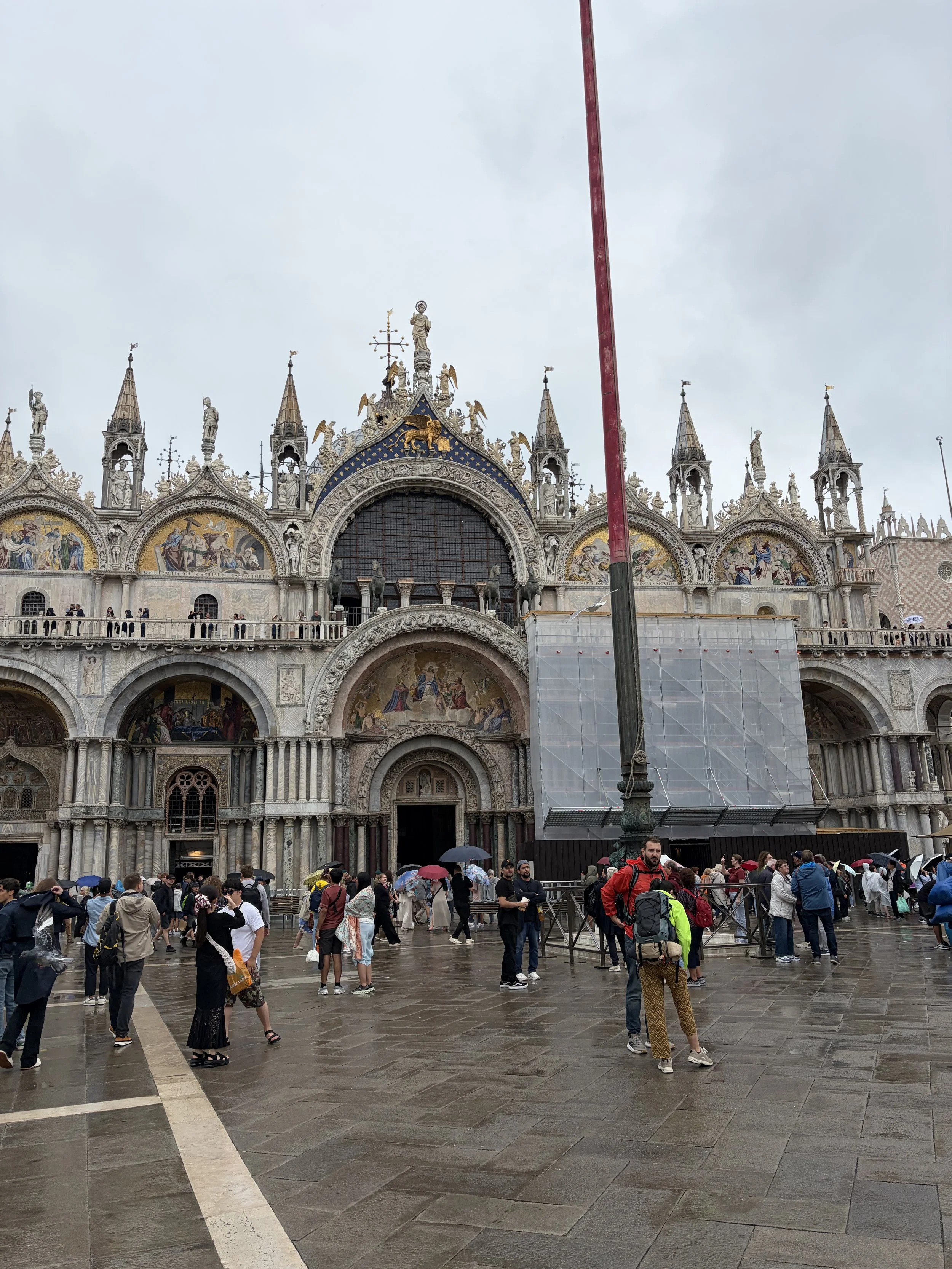
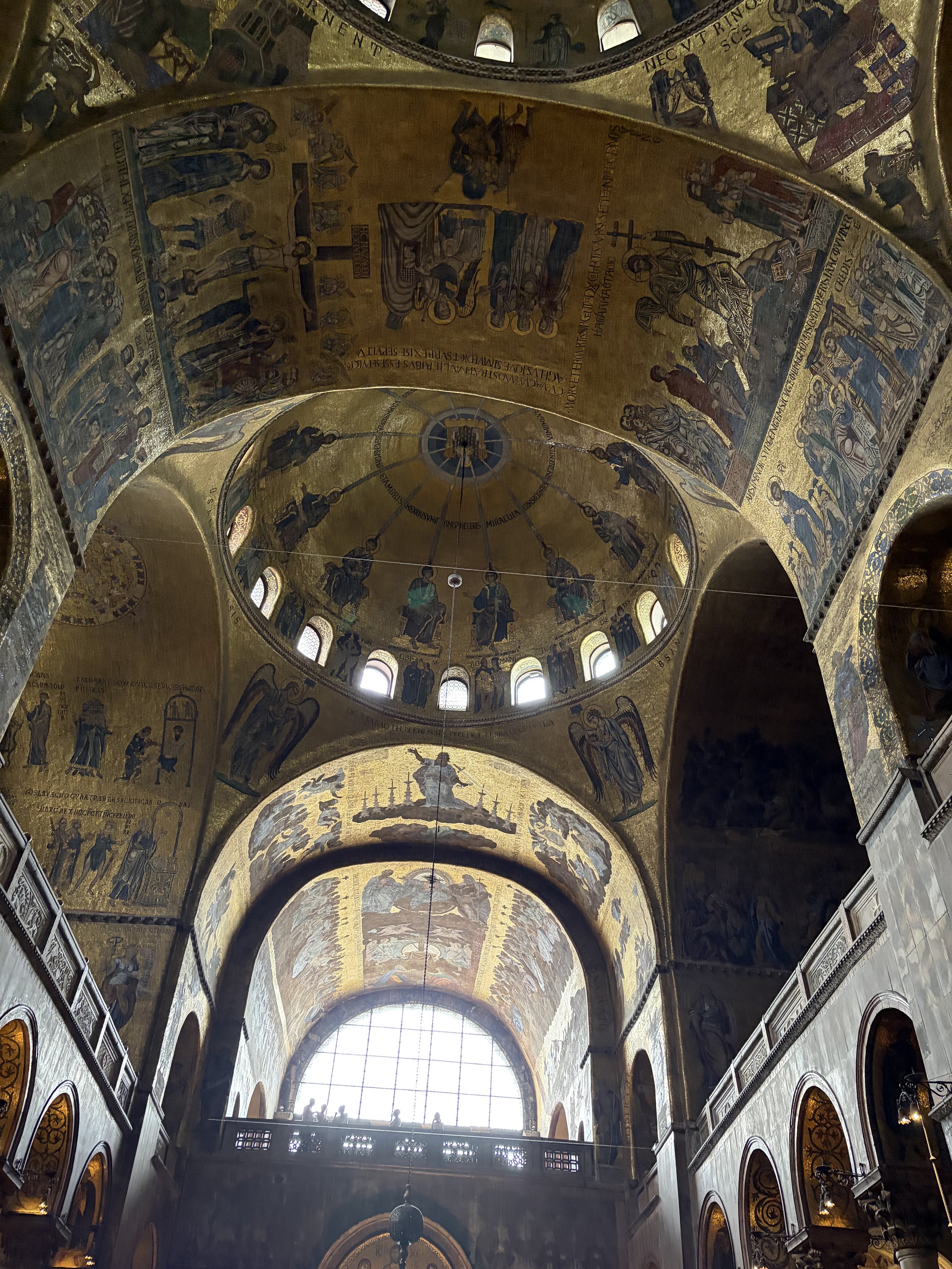
St. Mark’s Basilica was one of the highlights of my visit. The architecture and intricate golden decorations inside were beautiful.
The basilica is a historic church known for its Byzantine architectural influences and spectacular golden mosaics.
A little history
The original church was built in the 9th century to house the relics believed to be those of St. Mark.
The present basilica developed over several centuries, with strong Byzantine influences.
Its golden mosaics, domes and richly decorated interiors make it one of Venice’s most famous landmarks.
Wheelchair accessibility
I found the basilica accessible as a wheelchair user.
There is an accessible entrance on the side of the basilica, known as the Porta dei Fiori, with a ramp.
I approached the staff, who guided me on the entrance arrangements and ticket information.
The staff were helpful in explaining how to enter.
Ticket tip: St. Mark’s Basilica has an admission system that can include an entry contribution. The official accessibility information states that visitors with disabilities and their accompanying persons can receive free admission upon presenting the required disability documentation. Confirm the current arrangements before your visit.
Official information: https://www.basilicasanmarco.it/info/accessibilita/
4. Exploring Doge’s Palace
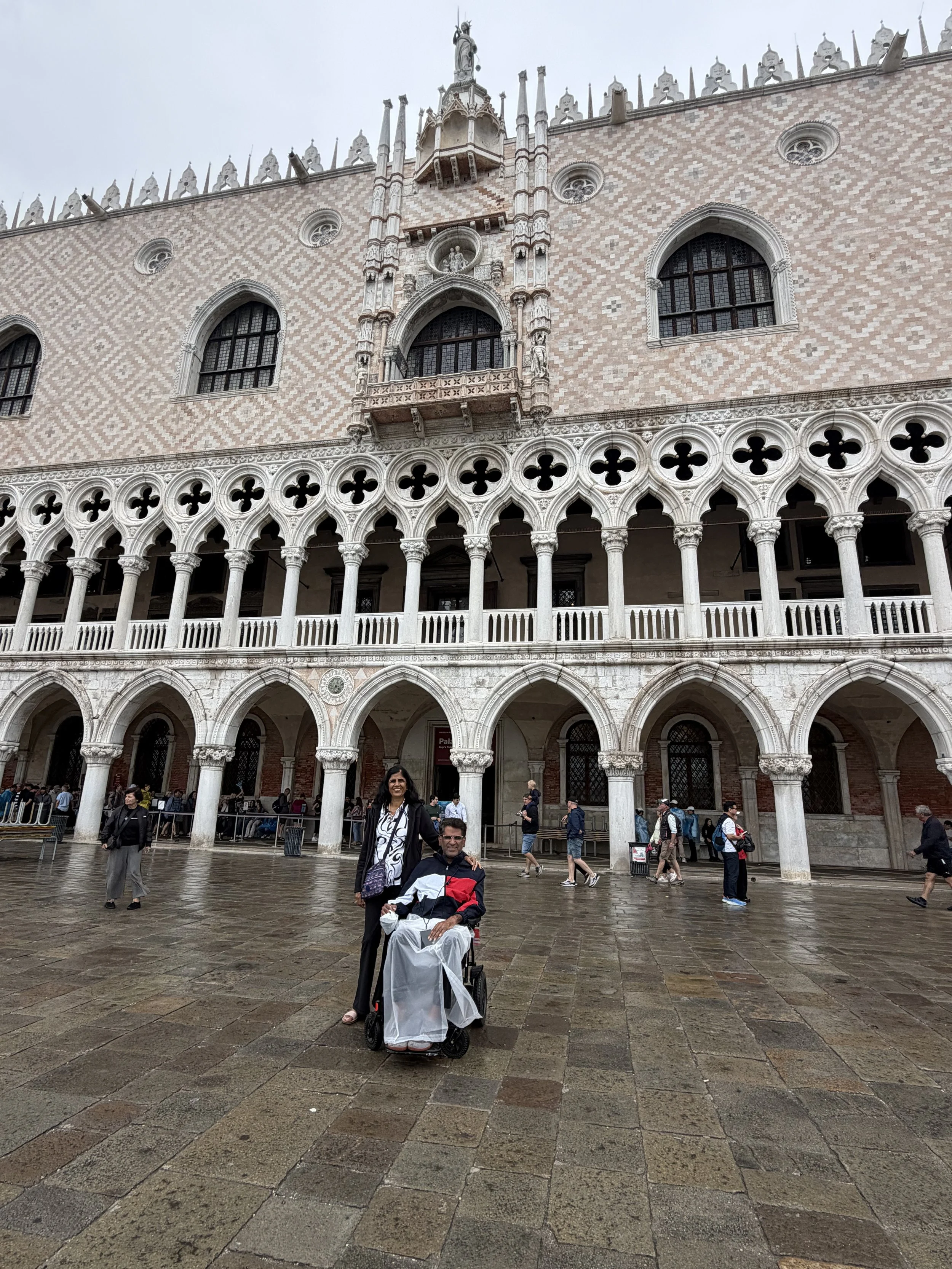
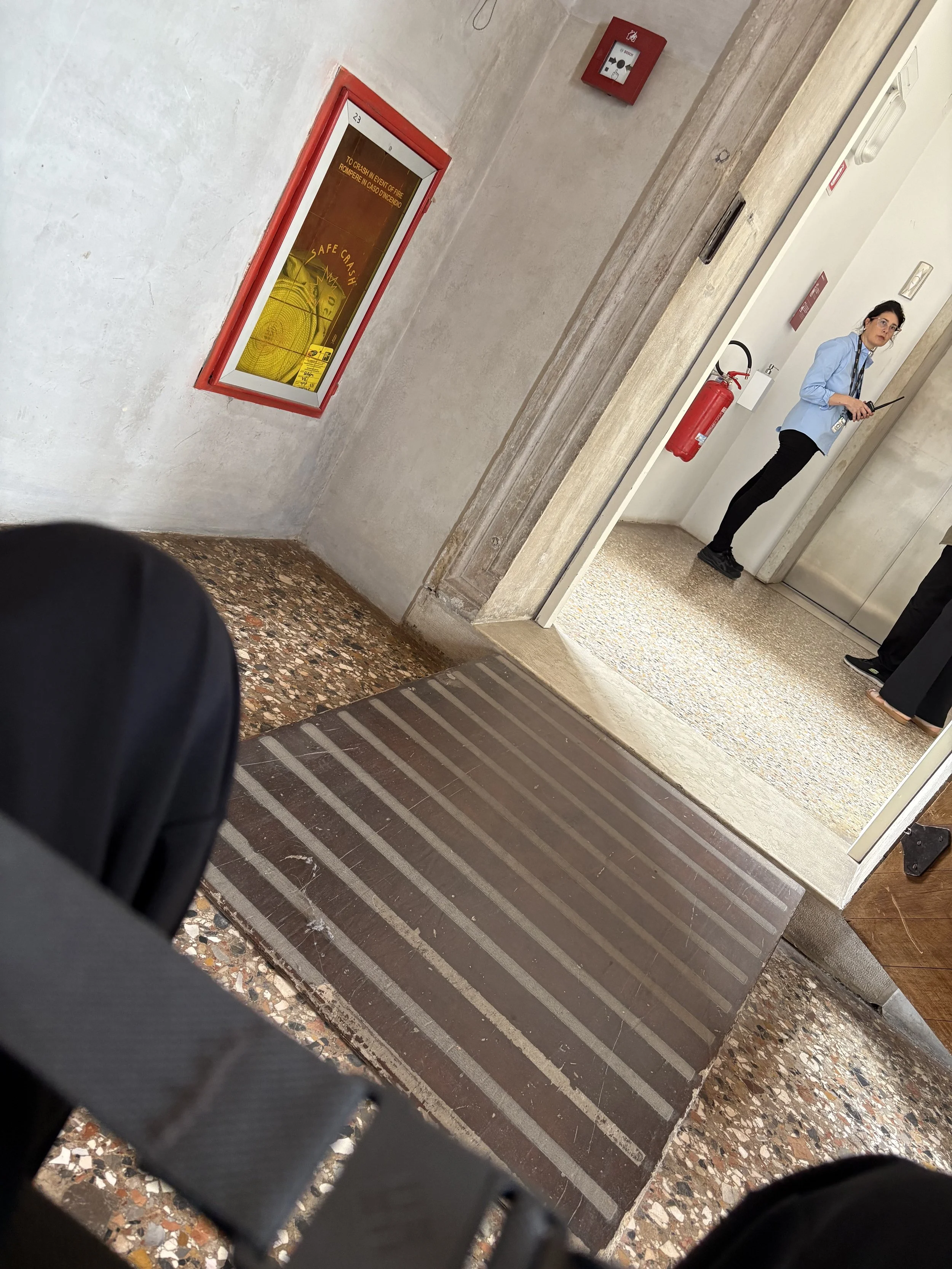
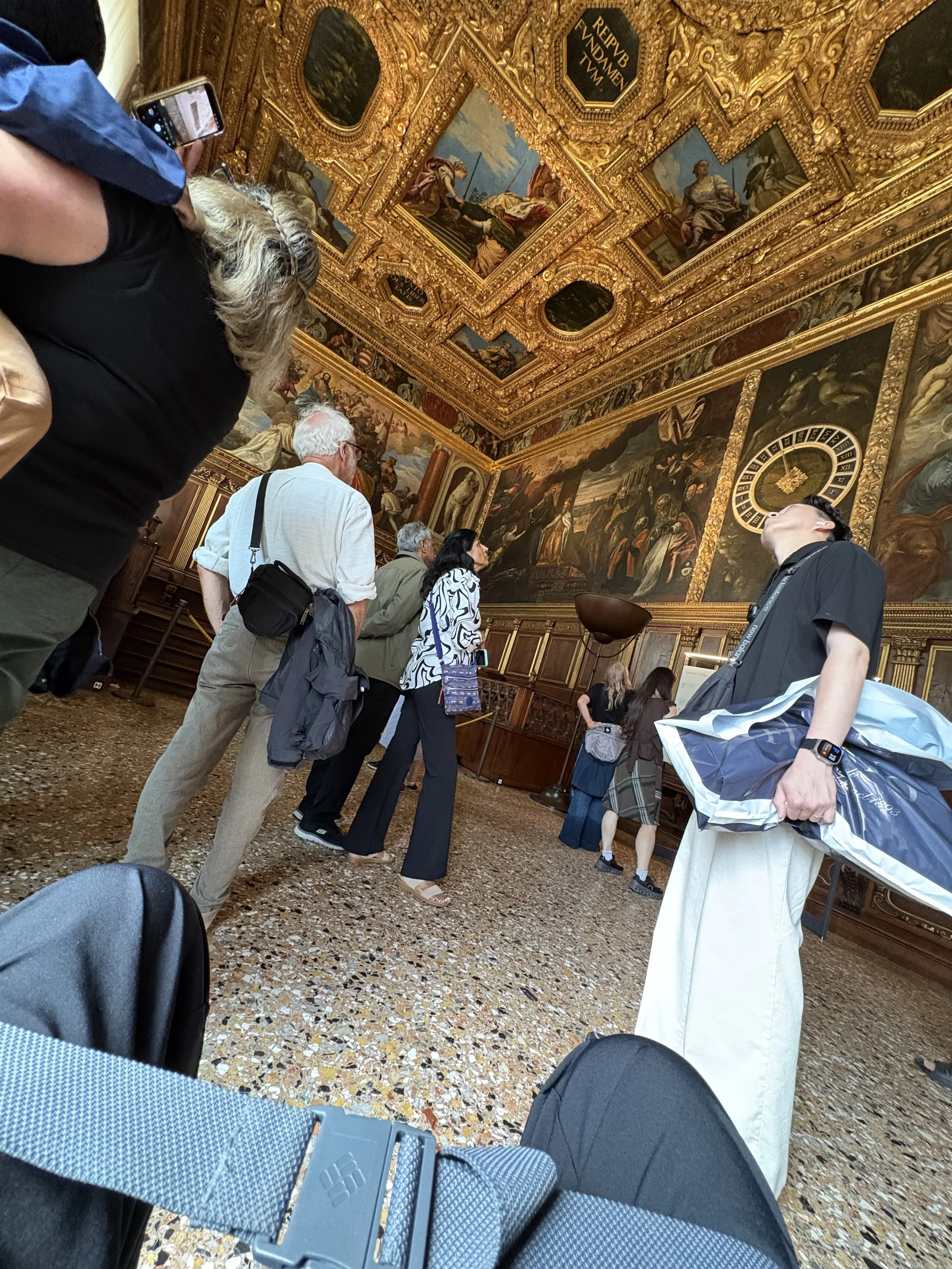
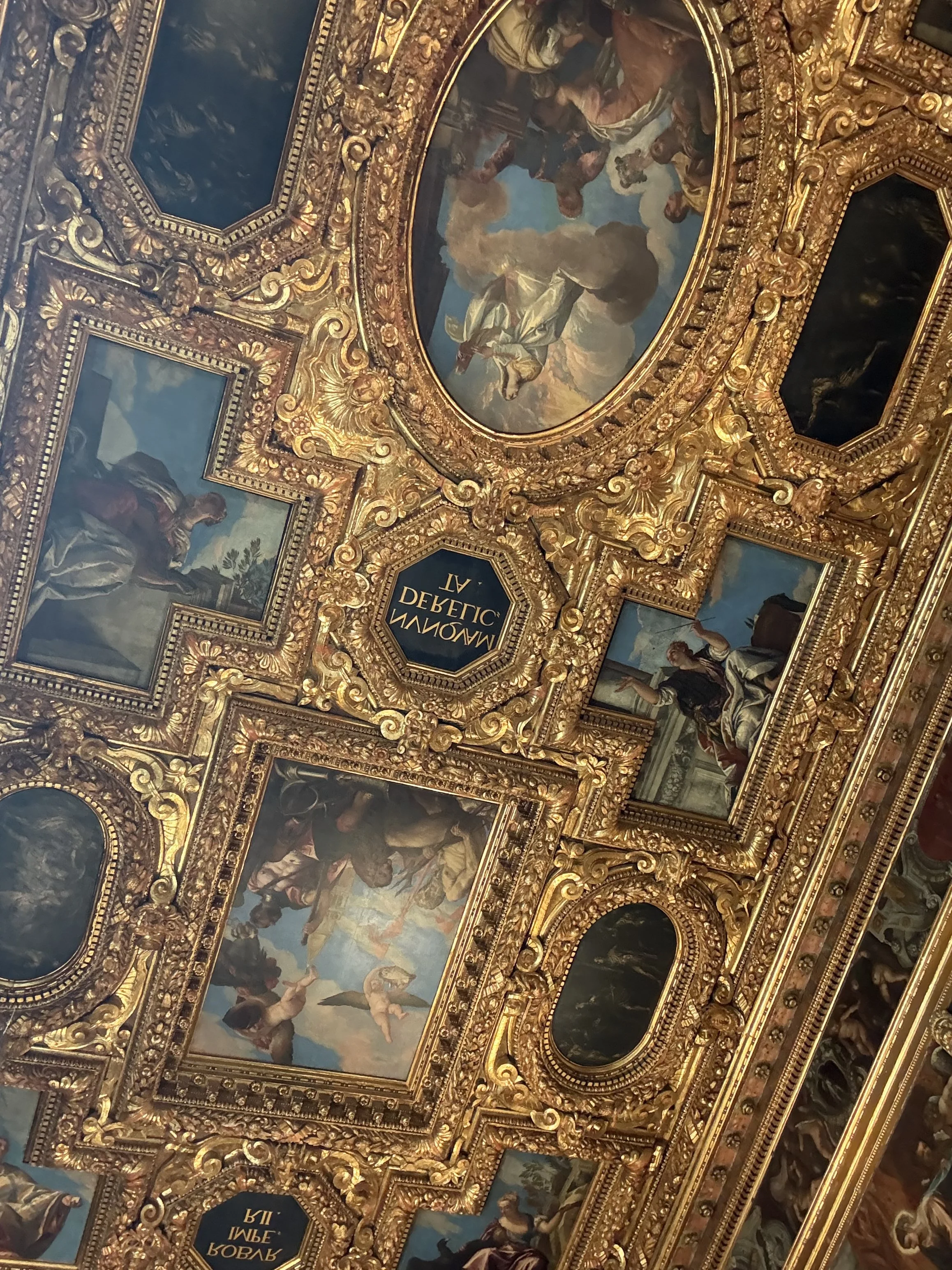
After visiting the basilica, we visited Doge’s Palace, another important landmark in St. Mark’s Square.
We purchased tickets for the attractions we wanted to visit. For Doge’s Palace, admission was free for one companion accompanying the wheelchair user, according to the arrangements we received.
A little history
A Doge was the elected head of the Republic of Venice, serving as its chief political leader.
Doge’s Palace was the residence of the Doge and the centre of Venice’s government.
Today, it is a museum showcasing Venice’s political history, artwork and grand historic rooms.
My experience
I found the museum decent and interesting. Having visited similar museums before, what stood out to me was learning how the Doge’s position worked and how Venice was governed.
It was a good opportunity to understand the history behind the city I was exploring.
Ticket tip: Doge’s Palace is part of the St. Mark’s Square Museums ticket system. The official museum information lists free admission for visitors with disabilities and one accompanying person, subject to the applicable requirements. Check the current ticket and accessibility arrangements before visiting.
Official ticket information: https://www.visitmuve.it/en/visit/tickets/
5. Enjoying St. Mark’s Square
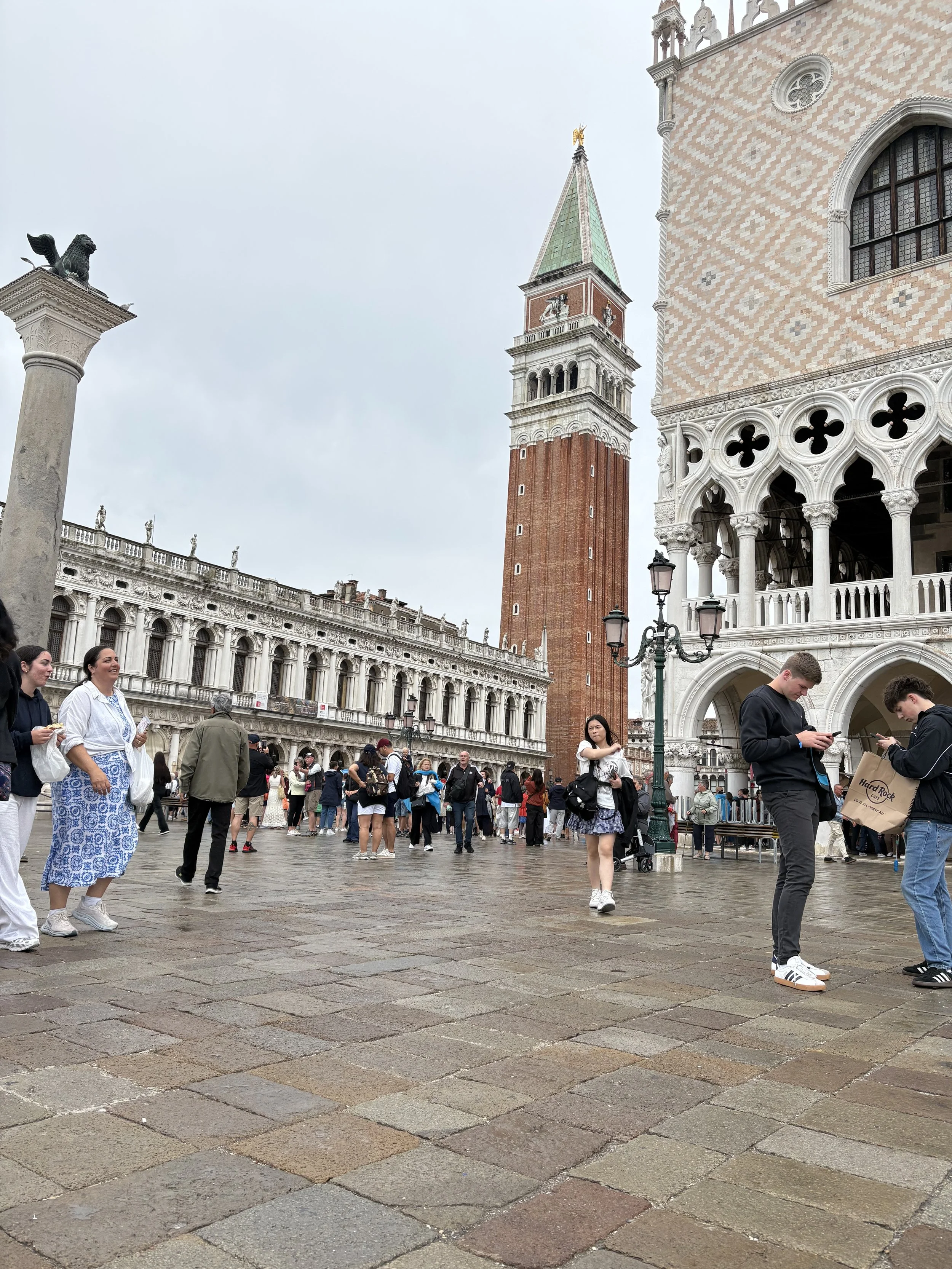
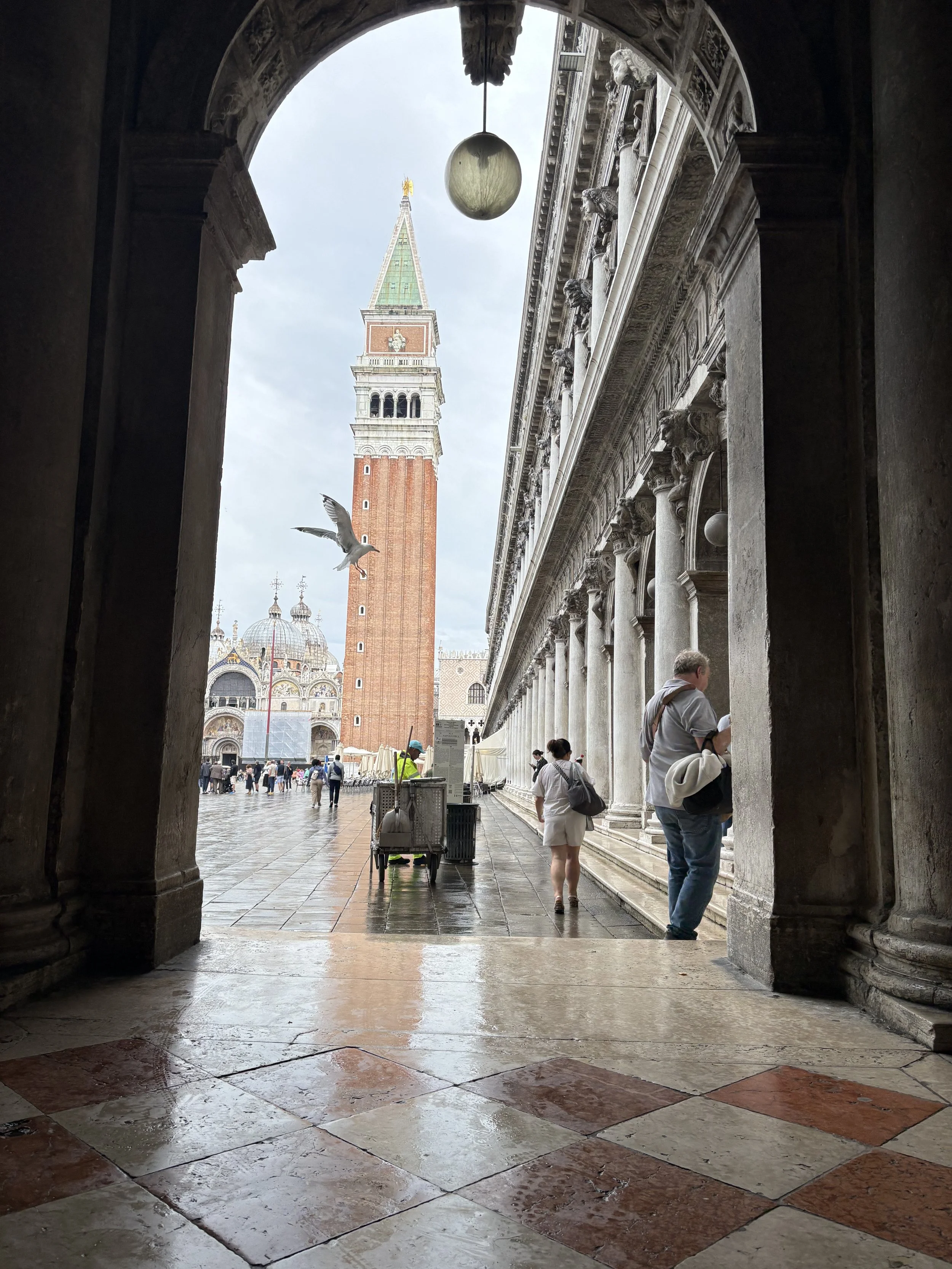
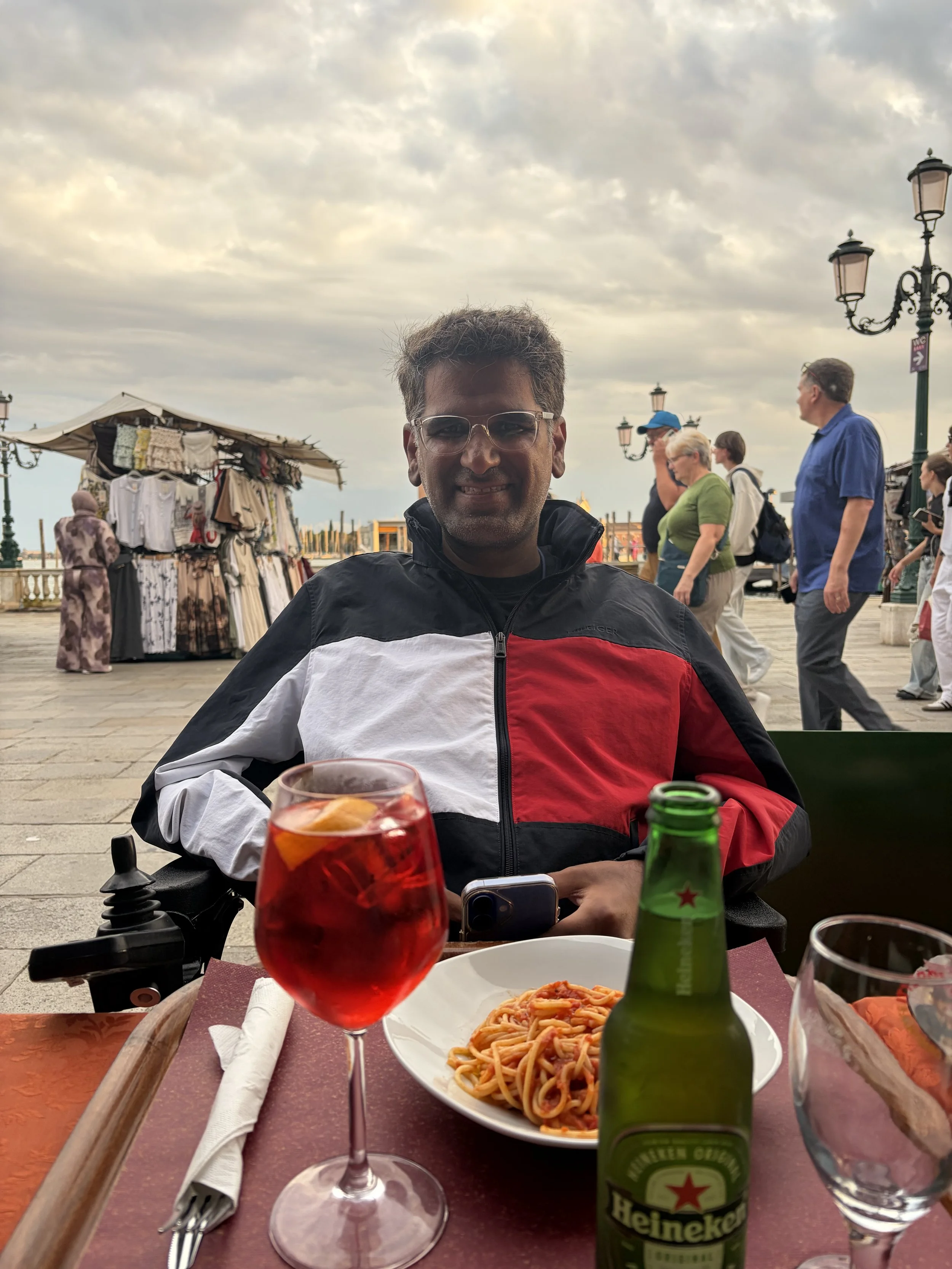
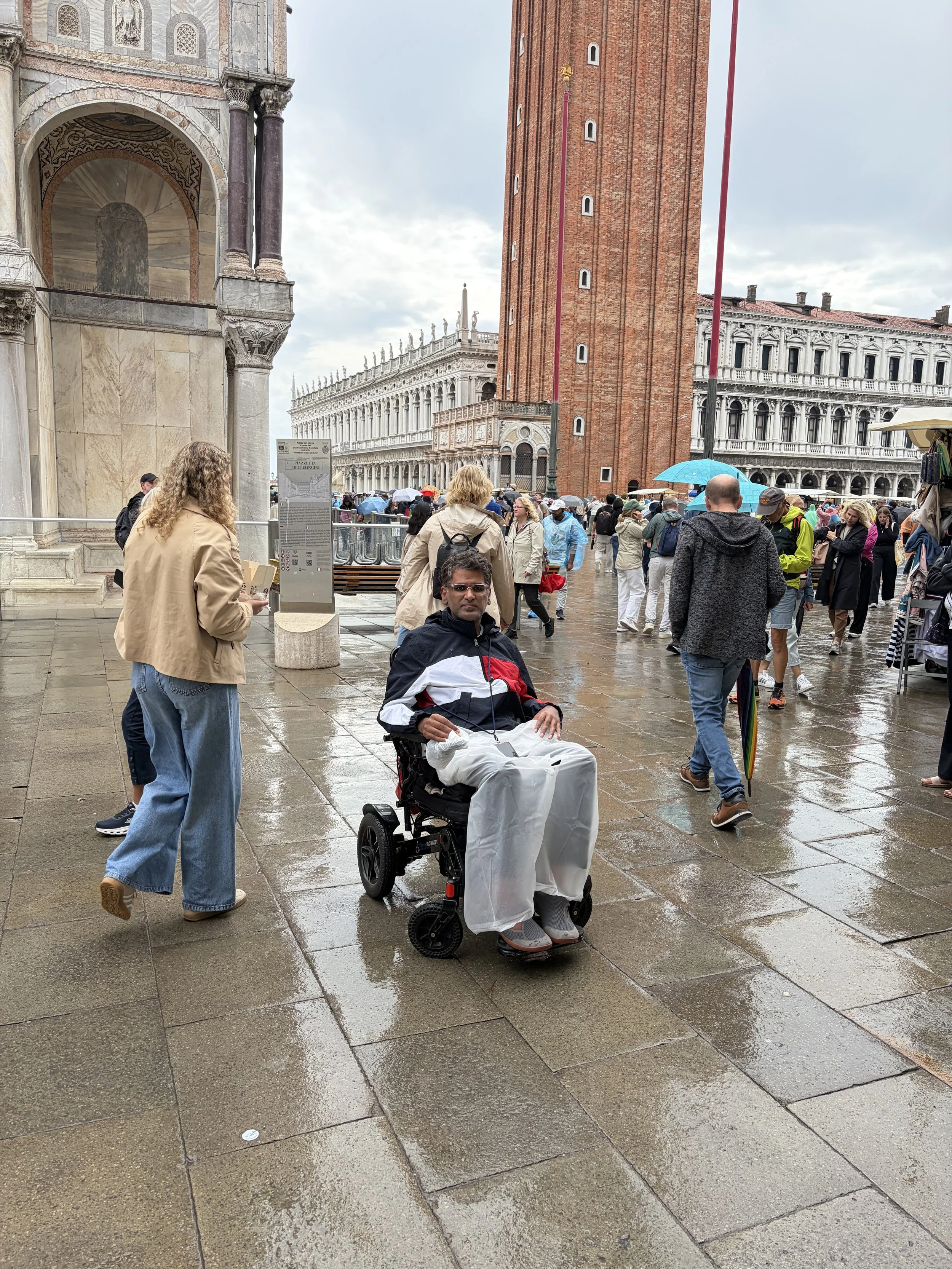
After visiting the two attractions, we spent some time enjoying the atmosphere of St. Mark’s Square.
There was plenty to see without having to rush from one attraction to another.
We walked around the square and explored the market stalls.
We passed the restaurants and stopped for a drink.
We took pictures near the famous bell tower, the Campanile of St. Mark’s.
We enjoyed the historic surroundings and the lively atmosphere.
It was a lovely way to slow down and take in Venice after visiting its major landmarks.
6. Exploring Venice’s Smaller Streets and Canals
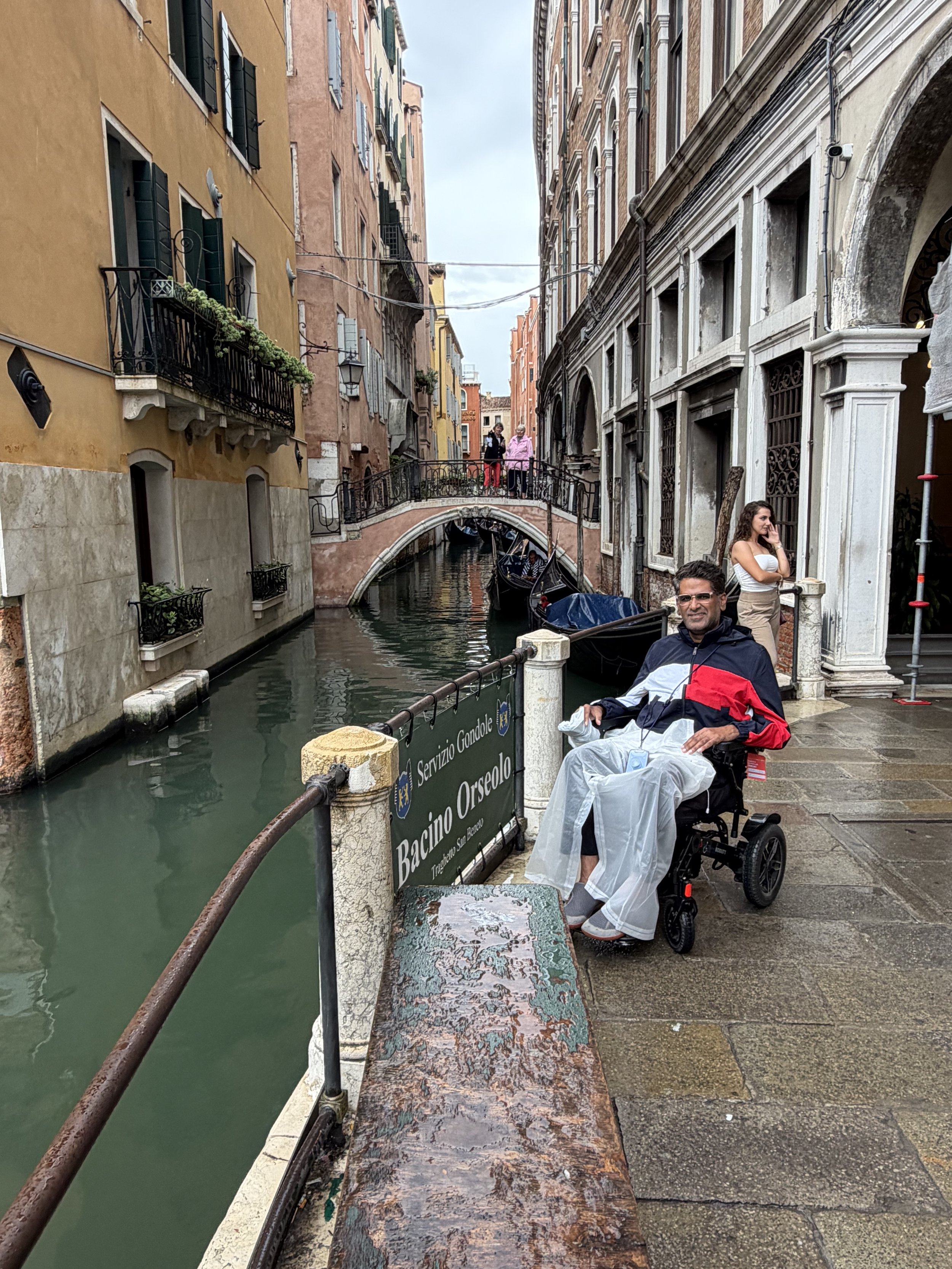
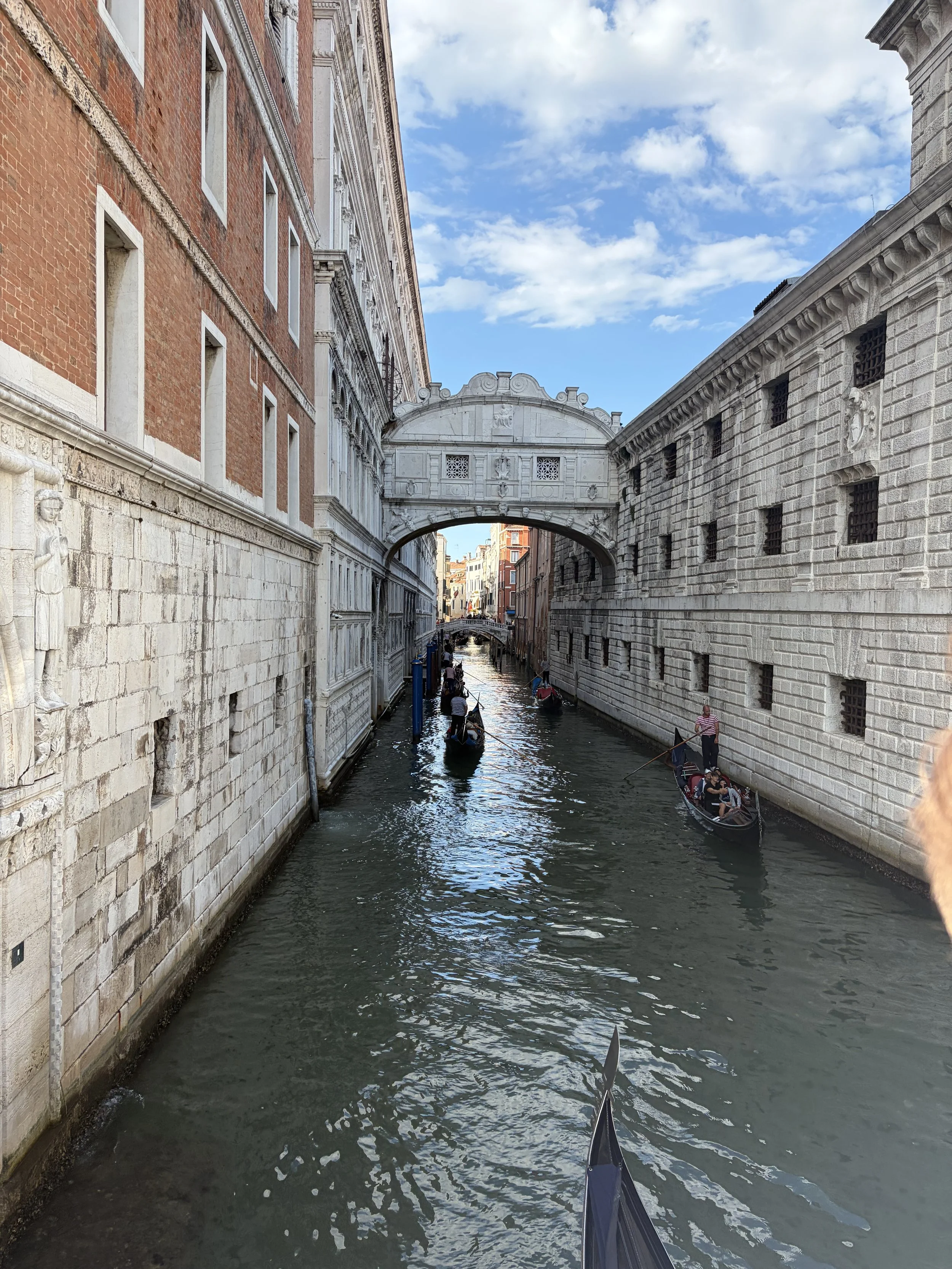
We also wandered through some of the smaller streets around the square to get a feel for everyday life in Venice.
We stopped to admire the gondolas.
We enjoyed views of the canals and the surrounding buildings.
We explored wherever the routes allowed us to go.
We tried some delicious Italian food, including spaghetti and pasta.
For me, these little moments were just as enjoyable as visiting the famous attractions. They gave us a chance to experience Venice at our own pace.
Accessibility tip: Venice has narrow streets, bridges and uneven surfaces. Plan your route carefully and check for step-free alternatives when exploring away from the main square.
https://www.veneziaunica.it/en/plan-your-trip/accessible-venice
7. Visiting Murano and Burano
On another day, after visiting Murano and Burano, we returned to St. Mark’s Square.
I would highly recommend including both islands in your Venice itinerary.
Murano is famous for its traditional glassmaking.
Burano is known for its colourful houses and traditional lacework.
Both islands offer something different from the main city, and I’ll share my experience in a separate blog post covering their attractions and wheelchair accessibility.
https://www.veneziaunica.it/en/plan-your-trip/accessible-venice
Stay tuned for my next post!
Search Keywords: wheelchair accessible Venice, wheelchair accessible things to do in Venice, Venice wheelchair travel guide, Venice accessibility guide, Venice Italy wheelchair travel, accessible St Mark’s Basilica, wheelchair accessible St Mark’s Square, St Mark’s Basilica wheelchair entrance, wheelchair accessible Doge’s Palace, Doge’s Palace accessibility, accessible Vaporetto Venice, Venice water bus wheelchair access, wheelchair accessible bridges in Venice, accessible public transport Venice, Venice travel tips for wheelchair users, wheelchair accessible attractions in Venice, accessible Murano and Burano, Venice accessible travel itinerary.
